Radon Mitigation Timeline: How Long Until Your Home Is Safe in St. Paul, MN?

The Outcome You Want
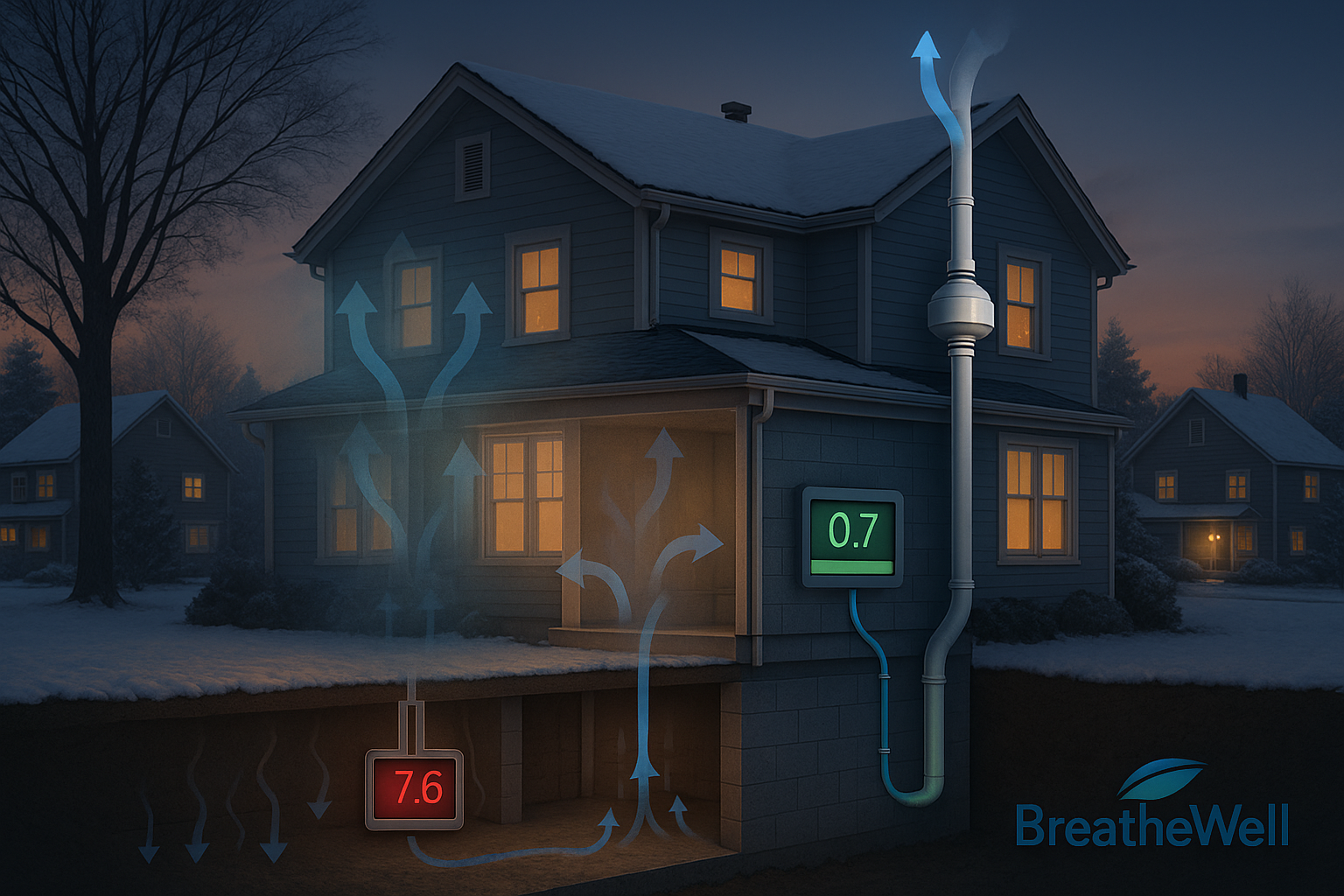
Radon moves into homes through soil and slab openings. A well designed mitigation system lowers levels quickly and then proves the improvement with certified testing. St. Paul homeowners ask a simple question: how long will this take. With BreatheWell, most projects move from consultation to verified results within days, and reductions begin as soon as the fan turns on.
Your Step-by-Step Timeline
- Consultation and review of results: same day to 48 hours
- On-site evaluation and proposal: 1 to 3 days
- Installation window: often 3 to 7 days from approval
- Post-mitigation short-term test: starts 24 hours after activation
- Documented results: usually within 2 to 7 days of install
- Long-term follow-up test: 90 days when weather permits
Step 1: Confirm The Baseline
Bring your test results, or we place a short-term test to set a clear baseline. Our target is to lower levels below 4.0 pCi/L, and we often achieve results near or under 2.0 pCi/L. Setting the target on day one helps align design choices and timing.
Step 2: Engineer The Right System
During the assessment, our technician checks slab thickness, drain tile, sump details, and practical routes for discharge. Many St. Paul homes have mixed foundations that include a finished basement and a partial crawl. We measure pressure communication between zones so the fan can pull evenly across the footprint. You receive a detailed plan with the fan model, pipe route, sealing plan, and any electrical work required.
Step 3: Install With Precision
Most homes are completed in a half day. The crew cores the suction point, creates or ties into sub-slab pathways, seals slab cracks and sump covers, and routes vent piping to meet code. The radon fan is mounted outside or in an approved attic space. When we power on the fan, you will see immediate suction on the manometer or digital gauge.
What You Can Expect On Install Day
- Minimal disruption and clean work areas
- Quiet operation from a properly mounted fan
- A professional finish that blends with your home
- Clear instructions on monitoring and filter changes if applicable
Step 4: Verify With Post-Mitigation Testing
We start the short-term test 24 hours after activation to allow the system to stabilize. Results are usually available within a few days. You receive a written report. If a foundation wing or crawl needs more pull, we fine tune the system by adding a suction point or increasing fan capacity. Verification is part of our process, not an extra.
How Quickly Will Levels Fall
In most St. Paul homes, you will see a sharp drop within the first 24 to 48 hours. Homes with thicker stone walls or compartmentalized slabs can require extra sealing or a second suction point. Our design accounts for these conditions so your results are reliable through winter and summer.
Local Factors In The Twin Cities
Freeze Thaw and Stack Effect:
Cold months increase natural stack effect, which can help mitigation performance but may also draw more soil gas if the slab is leaky. We seal key joints and penetrations so the fan does the work, not random air pathways.
Historic Housing Stock:
Older homes often have stone or block foundations. We use specialized sealing and, if needed, sub-membrane depressurization for crawl spaces to keep reductions consistent across the home.
What Can Change The Timeline
- Crawl spaces that require membranes
- Electrical needs for the fan circuit
- Limited exterior vent routes that need planning
- Permit requirements where applicable
Cost, ROI, and Ongoing Confidence
The system is a modest electrical load and runs continuously. The return comes from health protection, smoother real estate transactions, and documented air quality. Annual checks and a quick look at the manometer help you stay informed. If anything changes, we can retest and adjust.
FAQs
Do I need to leave the house for installation
No. You can stay home. Work areas are contained and clean.
When is it officially safe
Look for the initial drop within 24 to 48 hours, then rely on the post-mitigation short-term test for confirmation. The long-term test adds seasonal proof.
Will winter slow the process
No. We install year-round. Winter often helps system performance, and we protect exterior components for cold weather.
Ready To Protect Your St. Paul Home
BreatheWell Radon Solutions serves St. Paul and the greater Twin Cities with technical expertise and fast, verified results. Contact our team to schedule an assessment and get a clear timeline to safer air for your home.
Ready to work with BreatheWell Radon Solutions?
Let's connect! We’re here to help.
Send us a message and we’ll be in touch.
Or give us a call today at (651) 615-7770
Contact Us
Check Out Our Other Blogs!